January 31, 2026
As of Monday, Feb. 2, Penske Truck Leasing locations have resumed normal operating hours.
R
[Read more...]
Show less
As of Monday, Feb. 2, Penske Truck Leasing locations have resumed normal operating hours.

Change is constant, and what worked yesterday might not work tomorrow, especially as the environment supply chains operate in evolves. As businesses’ needs shift, existing solutions and partners may no longer be the right fit. Recognizing when it’s time to make a change can minimize inefficiencies, lost revenue and operational bottlenecks.
There are a number of market forces influencing the way business leaders shape their transportation and supply chain strategies today, and top among them are tariffs, the regulatory environment and the economy. Success depends on staying close to a combination of triggers, understanding how they intersect, and proactively positioning your fleet and logistics strategy to adapt before the market forces your hand.
Here are nine indicators that the status quo is no longer working.
As volumes increase, transportation and logistics providers need to be able to flex accordingly. Capacity constraints, on-time and in-full performance problems, limited flexibility during peak seasons or inconsistent service levels can be red flags that current providers are unable to adapt to changing needs.
When teams spend excessive time manually routing shipments, transferring inventory between locations or patching together temporary solutions, it signals the overall design is no longer working or that growth has outpaced the warehouse. Ideally, providers should have the carrier relationships, technology, capacity and network to flex up or down in response to demand.
Mergers and acquisitions often create redundancy or imbalance across a logistics network. Overlapping routes, underutilized facilities and duplicated resources lead to higher costs and wasted capacity.
“We recently worked with a customer that had seven different divisions that were all operating separately. One of the things we saw was that they had trucks passing each other,” said Amy Ilyes, vice president of logistics engineering at Penske Logistics. "A lot of times, they'll have a duplication of facilities, so they need to do some type of rationalization."
Trucks regularly passing each other, trailers that are half-full, poor driver utilization and redundant resources are all signs that it is time to re-evaluate the network. Optimizing the network for balance and synergy can uncover cost savings and service improvements.
Data and visibility have become table stakes in today’s operating environment. Shippers need real-time, detailed insights into inventory, freight, including estimated arrival times or delays, and their overall transportation spend. Data allows all stakeholders to make proactive, data-driven decisions that improve efficiency, performance and customer experience.
When data is fragmented across solutions, such as transportation management, warehouse management, enterprise resource planning and order management systems, reporting can be inconsistent. More importantly, costs such as detention, expedite fees or non-productive labor time, can be difficult to track. Unified, clean and trusted data is essential to driving performance, ensuring customer service and controlling costs.
As fleets grow, shift routes or face tighter cost pressures, long-standing equipment strategies can fall out of sync with operational needs. Increases in over-the-road failures, decreased fuel economy, slipping safety scores, higher capital costs or trouble sourcing the right equipment at the right time can indicate the current procurement approach is no longer delivering the uptime, reliability or flexibility needed.
Inaccurate or incomplete inventory data can lead to stockouts and fulfillment errors. Tier-one warehouse management systems can achieve above 99% inventory accuracy by tracking products at both the site and individual location level, ensuring that shippers always know exactly what they have and where it is located.
Good inventory data can also help shippers determine the best locations to ship from. “One of the first things we do when working with a customer is map shipping data. We had a situation where a customer didn’t realize they were routinely shipping from Florida to the Pacific Northwest,” Ilyes said.
When errors, miscounts, utilization gaps, lost inventory or inter-warehouse transfers increase, it signals that inventory practices, stocking levels or the overall network design no longer match operational needs.
As order profiles evolve, for example, shifting from full-pallet to mixed-case orders, the labor model, warehouse layout and process flow must evolve too. A warehouse initially designed for pallet picking may become inefficient or overwhelmed when case picking increases, due to the additional travel, touches and complexity.
Providers with engineered labor standards, such as the MOST (Maynard Operation Sequence Technique) method, can continuously evaluate productivity by measuring travel distance, lift height, weight and task difficulty for each pick. When productivity increasingly relies on manual interventions or workarounds to compensate for outdated processes, system limitations or new order profiles, it signals deeper design issues.
Similarly, large swings in labor demand, chronic overtime or bottlenecks on high-volume days indicate that the operation no longer matches the work it is being asked to perform. Sustainable efficiency requires ongoing reengineering, proactive slotting and tight alignment between operational execution and business requirements.
A rise in accidents, compliance violations or safety-related downtime can indicate that a provider’s risk management framework is no longer sufficient. Providers that prioritize training, a safety culture and proactive compliance monitoring help organizations mitigate exposure, protect their employees and maintain their reputation.
An increase in expenses without corresponding improvements in service, capacity or technology can indicate inefficiencies. While transportation costs naturally fluctuate with market conditions, cost growth should be matched by measurable benefits.
If rates rise but service quality, innovation or key performance indicators remain static, it suggests that the provider is no longer delivering adequate return on investment. Strong partners continually collaborate with customers to identify optimization opportunities, reduce total landed costs, and improve productivity, rather than simply passing on rate increases.
External forces, such as geopolitical issues, new regulatory requirements and shifting economic conditions, continue to reshape the transportation and supply chain landscape. For instance, the 25% tariff on imported medium- and heavy-duty vehicles and related parts, effective November 1, 2025, will significantly affect the cost of new assets and may alter long-term fleet planning. When macroeconomic situations change, organizations must reassess their supply chain structures and organizational goals to remain agile and cost competitive.
When these indicators emerge, it may be time to review operations. While there isn't a one-size-fits-all solution for every situation, Penske offers a wide range of services, including logistics, brokerage, warehousing, leased equipment, rental trucks and used equipment, to help shippers and transportation providers find the solutions that can keep pace with their shifting needs.
“The right solutions depend on the symptom,” Ilyes said.
If you're seeing early warning signs of misalignment, now is the right time to reassess. Organizations that act early gain a strategic advantage. Penske’s team of engineers, supply chain specialists and transportation experts are here to help with network design, warehousing performance, data visibility, fleet growth and more.
Interested in learning more? See additional strategies below:
7 Signs It’s Time To Revisit Equipment Procurement Strategies
6 Warning Signs Growth Is Outpacing the Warehouse
5 Signs It’s Time for a Network Redesign

Each December, National Wreaths Across America Day unites millions of volunteers to honor our nation’s veterans. Penske was proud to participate again this year, supporting remembrance ceremonies and wreath-laying events at military cemeteries, memorials and historic sites across the country.
Associates and their families joined local wreath-laying ceremonies nationwide, including events at Arlington National Cemetery in Arlington, Virginia; Fort Indiantown Gap National Cemetery in Annville, Pennsylvania; Jefferson Barracks National Cemetery in St. Louis, Missouri; Raleigh National Cemetery in Raleigh, North Carolina; and historic sites in Chester, Virginia.

In St. Louis, Penske associate Kimberlee Sexton placed a wreath at her father’s gravesite at Jefferson Barracks National Cemetery — a personal tribute that reflected the day’s deeper meaning.
Additionally, Epes Transport, a Penske Company, played an essential role by providing two trucks and two drivers to deliver wreaths to Arlington, Virginia, and Raleigh, North Carolina, helping ensure thousands of wreaths reached their destination.
Wreaths Across America, a nonprofit organization founded in 1992, began with a single act of gratitude and has grown into a nationwide movement dedicated to remembering fallen heroes, honoring those who serve and teaching future generations the value of freedom.
This year, Penske associates once again demonstrated pride, unity and gratitude, reinforcing our ongoing commitment to service, supporting veterans and making a meaningful difference within the communities we proudly call home.

The U.S. freight industry is complex, and seasonal shifts in demand affect everything from available capacity to freight pricing. During peak seasons, regional imbalances can occur, spot rates can increase, and heavier traffic at warehouses and distribution centers can lead to longer dwell times and higher detention costs.
Additionally, trailers and containers may become harder to source.
Even if fleets and shippers aren’t working with goods tied to a peak season, the season can still impact their operations by making it harder to find capacity, drivers and storage space. Being aware of seasons, including when they overlap, can help carriers and shippers alike anticipate volatility and plan strategically.
Consumer demand influences several freight surges, with back-to-school and holiday shopping being among the top drivers of retail sales. The retail peak typically begins in July and lasts through late October, as retailers stock inventory ahead of major shopping dates. Demand can carry on into November and December. The National Retail Federation estimated that consumers spent $128.2 billion on back-to-school shopping, while Halloween spending was expected to reach a record $13.1 billion this year. The U.S. Census Bureau estimates that consumers will spend $994.1 billion on holiday spending from Nov. 1 through Dec. 31.
From spring into early summer, the agricultural industry can dominate regional markets, especially as crops from California, Florida, the Southwest and the Southeast move from the field to the market. The traditional produce season runs from April through July, but the exact timing varies by crop and region. The planting season can also create a spike, driving up capacity demand as seed, fertilizer and farm equipment ship in the spring.
While the peak retail seasons coincide with popular holidays, including Halloween, Thanksgiving, Christmas and Hanukkah, others can still lead to an increase in freight. During the summer months, Memorial Day and the Fourth of July can increase demand for backyard grills, outdoor furniture and yard supplies. Easter increases demand for candy, toys, clothing, decorations and groceries.
When the ground thaws, construction projects begin across the country, ranging from road and bridge construction to housing starts and commercial developments. That means steel, lumber, pipe, roofing and other products start moving. Construction typically occurs from March to October, but these periods may be longer in specific regions.
Beyond the well-known surges, several smaller surge periods can affect capacity, especially in specific regions. Cold and flu season can increase demand for healthcare-related goods. In the spring, beverage and bottling companies increase production ahead of summer surge periods. A similar ramp-up occurs in the packaging industry in late summer, when corrugated box and pallet producers increase production to prepare for the upcoming retail holiday season. In the Pacific Northwest, fall brings a logging rush with timber and pulp being hauled from September through November.
Strategic planning can help fleets and shippers be proactive rather than reactive when peak seasons hit, ensuring capacity is available and helping control costs. Penske has several solutions to help manage peak season needs, including full-service truck and trailer leases, commercial rental trucks, used equipment and logistics services.
How Leasing Helps Fleets Stay Ready for Peak Season
How Logistics Services Keep Supply Chains Moving During Peak Season
How Rental Equipment Helps Fleets Stay Ahead During Peak Season

Penske Transportation Solutions is a 2026 Military-Friendly Gold Employer. The leading transportation services provider’s recruitment and retention of veterans was recognized by VIQTORY, a veteran-owned business and the publisher of the G.I. Jobs and Military Spouses publications.
Kayla Lopez, vice president of memberships, Military-Friendly noted: “earning the Military-Friendly designation is more than a badge; it’s a reflection of deep-rooted values and strategic foresight. These organizations don’t just open doors for veterans, spouses, and service members; they build pathways for lasting impact.”
Penske was given the Military-Friendly Employers designation via an evaluation process that utilized public data sources and proprietary survey responses. The ratings were compiled by combining survey scores with an assessment of the organization’s ability to meet thresholds for recruitment, new hire retention, employee turnover, and promotion and advancement.
“We’re excited to be recognized again as a Military-Friendly Gold Employer,” said Jennifer Sockel, Penske executive vice president of talent and enterprise services. “Our veterans bring exceptional talent and discipline to our organization, helping us move forward together. This designation reinforces our ongoing commitment to creating meaningful opportunities for those who’ve served.”
If you would like to learn more about career opportunities for veterans at Penske, please click here.
By “Move Ahead” Staff
The annual Top Companies list highlights organizations that provide a culture where associates feel valued and respected, and receive quality benefits, continued training and opportunities for development.
Penske is a gold level partner of WIT, supporting WIT’s mission to empower women, celebrate their achievements, and address the challenges they face within the trucking industry. Penske’s support for WIT includes sponsorship of its annual conference and the courtesy transport of WIT’s educational trailer.
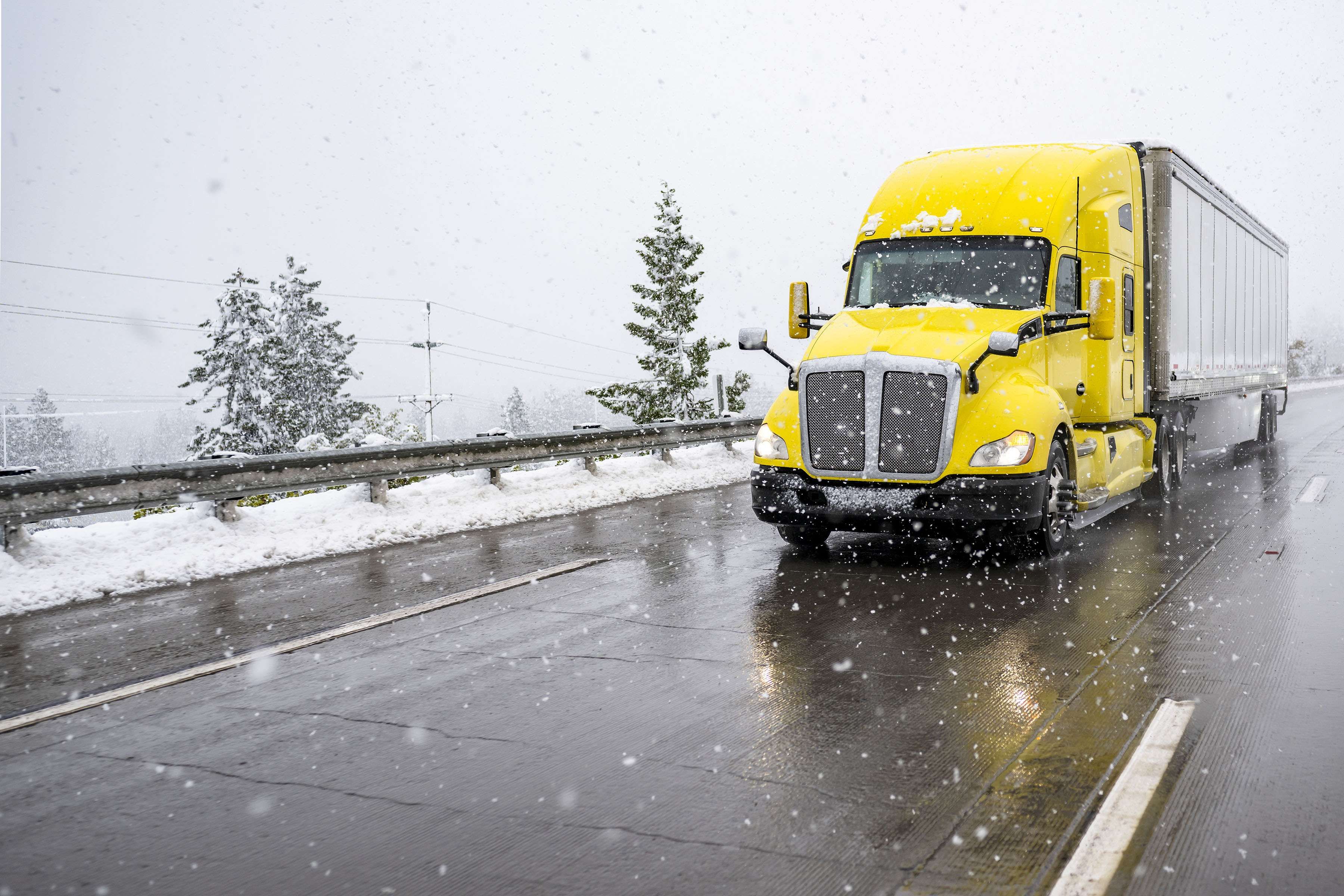
As winter weather comes calling, drivers in certain regions of the country are bound to have snow and ice buildup on their vehicles. Not only can that snow and ice dislodge during transit, damaging vehicles or injuring drivers, it can also mean drivers may face state fines.
While not every state has regulations addressing snow and ice, several do, and staying current on them is the responsibility of both carriers and drivers.
New Jersey has one of the stricter laws concerning snow and ice, requiring drivers to completely clear their vehicles of snow and ice before taking to the roadways. Commercial vehicles violating the law face fines of up to $1,500. A portion of the fines will be used to finance the installation of more roadside snow-removal equipment. New Jersey has said it will not ticket professional drivers who can demonstrate they are traveling to a snow-removal station.
Drivers in Pennsylvania also must remove snow and ice from their vehicles before hitting the highways. They face severe fines of up to $1,500 if snow or ice they failed to clear from their vehicle causes injury or death to another person. Connecticut has a similar law, and in the state of New York, it's illegal to drive with snow or ice obstructing your view.
Those in the trucking industry are well aware of the safety issues that surround snow and ice removal. What’s more, drivers cannot be required to climb on top of their rigs to remove snow without violating worker-safety provisions.
Drivers have reported using truck washes to loosen and remove snow and ice. Herbert Mayo, vice president of risk control for Lockton Companies, a national insurance broker, advises drivers to wait until later in the day to try to clear vehicles, if possible, as the sun will warm the trailer and the ice will slide off more easily.
“Don’t forget [the] buildup of ice and snow behind the tires on the mud flaps/wheel wells. This can be just as dangerous, as it is typically a large ball. It forms from the spray and is more frequent than ice on the roof,” Mayo said.
Laws in other parts of the country don’t require drivers to clear snow from the top of their rigs, but drivers still need to ensure good visibility and, if possible, remove as much ice as they can.
In Alaska, snow and ice may not obscure windshield visibility, and law enforcement officers in Georgia, Iowa, Michigan and Nebraska may issue citations if a vehicle is considered a danger.
In New Hampshire, officers may issue citations under negligence for snow and ice falling from a vehicle, and officers in Washington, D.C., may stop a motorist for traveling with accumulated snow and ice.
In Massachusetts, the Massachusetts Turnpike Authority can prohibit vehicles from using the roadway if debris, including snow or ice, could fall from the vehicle and “endanger individuals or property.” In addition, Massachusetts Turnpike Police have the authority to fine drivers for failing to clear vehicles.
For more information, visit Quick Tips To Improve Uptime in Winter Months. Snow and ice removal laws for specific states can be found by searching the Department of Transportation websites for each state.
By “Move Ahead” Staff
Originally published on January 3, 2012. Updated in October 2025.
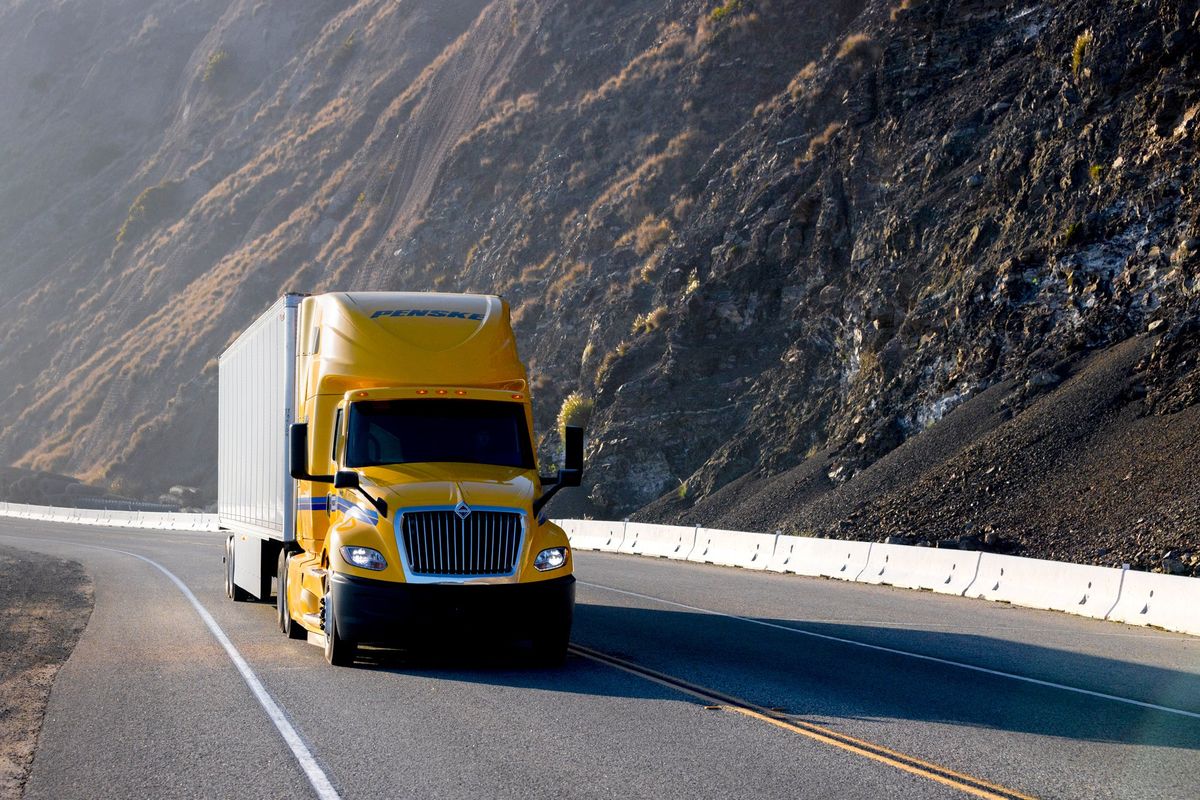
Private fleets are continuing to exert strength and control over their supply chains, positioning themselves as a value-added transportation solution. Private fleets have increased the number of shipments, freight volume and value of freight hauled for more than 11 years, according to the National Private Truck Council's 2025 Benchmarking Survey.
“Private fleets are capturing enhanced control over the supply chain,” said Tom Moore, executive vice president of the National Private Truck Council. “I think for many years, we've been a cost and customer service-focused community, and now we're talking about adding value back into those corporations that operate private fleets as an extension of their primary business.”
This year’s survey found that private fleets handled 70% of outbound freight moves, down from last year’s 75%. “We gave a little bit back, but we’re still at pre-pandemic levels,” Moore said. “For years and years, that outbound market share percolated between 67% and 68% just like clockwork.”
The number of inbound movements private fleets handle increased to 43% from 35% last year. Historically, private fleets have proven their value proposition on the outbound side of the business. However, the increased visibility, the ability to analyze the data and other strategies that have been beneficial on the outbound side of the business are giving fleets more control over costs and service on inbound moves.
Moore presented the results of the 2025 National Private Truck Council Benchmarking Survey recently. He was joined by Gary Petty, NPTC’s CEO; Jim Lager, executive vice president of sales and rental for Penske Truck Leasing; Mike Schwersenska, general manager of Brakebush Transportation; and David Barth, transportation safety manager at Wegmans.
NPTC's Benchmarking Survey, which is sponsored by Penske Truck Leasing, provides metrics in several operating areas. “This is information that fleets need in order to operate efficiently and at the highest level that they can,” Lager said. “We believe firmly in as much information as you can get your hands on, and this is a great source for that.”
According to the report, annual mileage among respondents decreased to 80,400. “That's a drop of nearly 5,000 miles over last year and the lowest number we've ever achieved in the history of the survey,” Moore said.
The decrease is due, in part, to companies adding distribution centers and warehouses. Most private fleets reported operating out of multiple locations, with the average number coming in at 49, up from 44 last year. "Most of our members are moving closer to the customer, and that has an impact in terms of other elements of the operation," Moore said.
Business growth, private fleet expansion, mergers and acquisitions, and a need to create a more driver-friendly network are all driving expansion. Barth said Wegman’s is among those adding facilities. “It’s had an enormous impact on the number of miles we’re running,” he said. “It’s a conscious business decision and it’s certainly paid dividends for us.”
Fleets use a combination of leasing, ownership and rental strategies. This year, 45% of fleets reported owning 90% or more of their heavy-duty power equipment, compared to 38% last year. The percentage that leases held steady at 28% while 27% use a combination of leasing and ownership.
“This year in particular, there's a lot of equipment on the market,” Lager said, adding that shifts in capacity have a direct impact on leasing and rental demand. “In 2021, when things were really tight and people had trouble getting equipment, you saw leasing go up and rental go up with it.”
Rental activity, which increased in previous years, has decreased slightly due to slowing economic and business conditions. “It's off the highs of the last few years but still pretty strong in the grand scheme of things,” Lager said. “This is where we see the drop off first, and this is where we see it pick back up first.”
The average age of equipment overall is under 4.4 years. The average age is higher for owned equipment—5.34 years—compared to those that lease all of their equipment—3.2 years.
Overall trade cycles for Class 8 trucks averaged 6.6 years, up from 6.1. Fleets that rely on leasing have shorter trade cycles for equipment—an average of 5.5 years versus 7.4 years for companies that own most of their equipment. Driven by trade cycles, leased fleets enjoy a fuel economy of 7.24 miles per gallon, compared to 6.84 for fleets that own most of their equipment.
Among respondents, 41% of fleets report outsourcing nearly all of their maintenance, while 17% said they conduct all or nearly all maintenance themselves, the lowest level in the history of the survey. Lager said trucks are becoming more and more difficult to diagnose and repair as they become more complex. “There's more technology on them, more computers, and it's just very hard to maintain them without a lot of scale,” he said.
Safety performance remains high among private fleets. “Private fleets are three times safer than the general trucking industry based on data reported in the FMCSA database,” Petty said.
Use of advanced technology has increased, and private fleets have invested heavily in active safety solutions. Nearly three-quarters reported adoption of a broad range of technologies. All respondents have adopted automatic transmissions, while 88% are using in-cab cameras, 86% are monitoring speed and 83% are using collision warnings.
The No. 1 challenge reported by respondents is cost, followed by driver related issues, including an aging driver population, recruiting, hiring and retention. For the third year in a row, the average age for all drivers in the survey remains just below 50 years of age, averaging 49.4 this year.
Despite the challenges, driver turnover dropped to 18.4% from 20.2%. The top three reasons drivers leave is to take another job, retirement or disciplinary issues. While it is always challenging to have drivers leave, Schwersenska said retirements are a good indicator of success overall. “I think it's a good thing when we're seeing folks that are in their mid-60s and able to retire from a driving job,” he said.
Schwersenska said he has also seen an increased focus on driver wellness since the pandemic. "We had so much freight to deliver at the time, and things were so wild on the outside that we really focused on taking better care of the drivers that we had on staff already and any of the new drivers that we brought on,” he said.
Average driver compensation increased to $91,081, up from $89,900 last year. Compensation has risen steadily since 2008, when it averaged $47,000.
Private fleets reported that they will continue to invest in their operations, with 48% saying that they plan to add equipment or grow the size of the fleet and 28% saying they expect to handle more of the company’s freight.
“The fact of the matter is, we want our drivers handling the majority of that freight, because nobody can handle that work as well as our professional drivers,” Barth said.
Moore added that the private fleet community is strong and continues to grow stronger. “We're setting the bar higher, and every year we continue to rise above the prior year's performance, which is a testament to the professionalism of those folks running the fleets in our operation,” he said.
Penske Truck Leasing is a Penske Transportation Solutions company headquartered in Reading, Pennsylvania. Solutions from Penske include full-service truck leasing, fleet maintenance, truck rentals, used trucks, and a comprehensive array of technologies to keep the world moving forward. Visit pensketruckleasing.com for more information.
By “Move Ahead” Staff
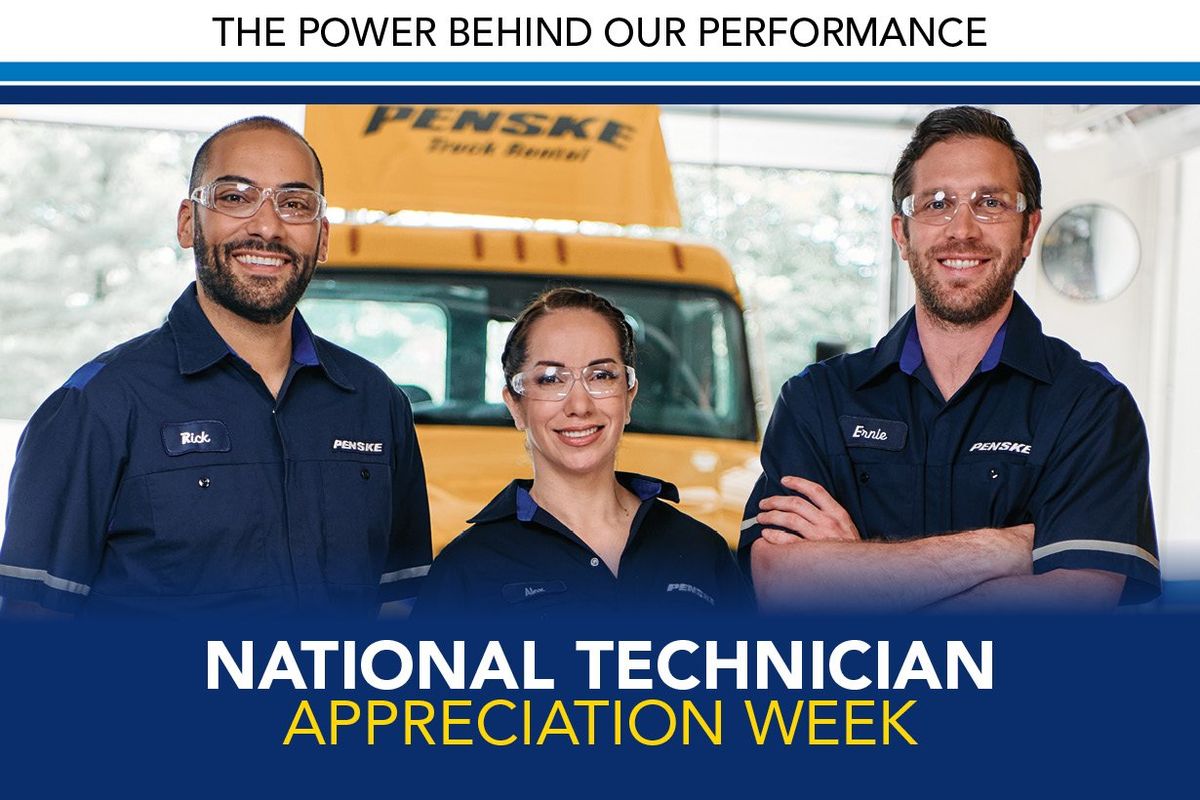
Every day, Penske’s technicians and customer service representatives (CSRs) keep over 400,000 vehicles moving safely across North America. This week, Sept. 21–27, we’re proud to celebrate National Technician Appreciation Week and recognize the more than 11,500 associates who power our performance.
Much of their work happens behind the scenes, but its impact is felt everywhere — keeping supply chains moving, businesses running and communities thriving. Penske technicians and CSRs do more than make repairs. They keep fleets road-ready, give customers confidence and help ensure the goods that fuel our economy reach the people who need them most.
“Behind every mile our trucks travel, every load we deliver and every promise we keep, there’s a skilled technician making it all possible,” said Mike Duquette, senior vice president of maintenance field operations at Penske Truck Leasing.
All week long, Penske will recognize technicians and CSRs across the company, spotlighting the skills, training and career paths that play an essential role in keeping the transportation industry moving.
Watch a special message of appreciation from Penske’s leadership team to Penske technicians and CSRs.
Click to view the video with Spanish subtitles here or with French-Canadian subtitles here.
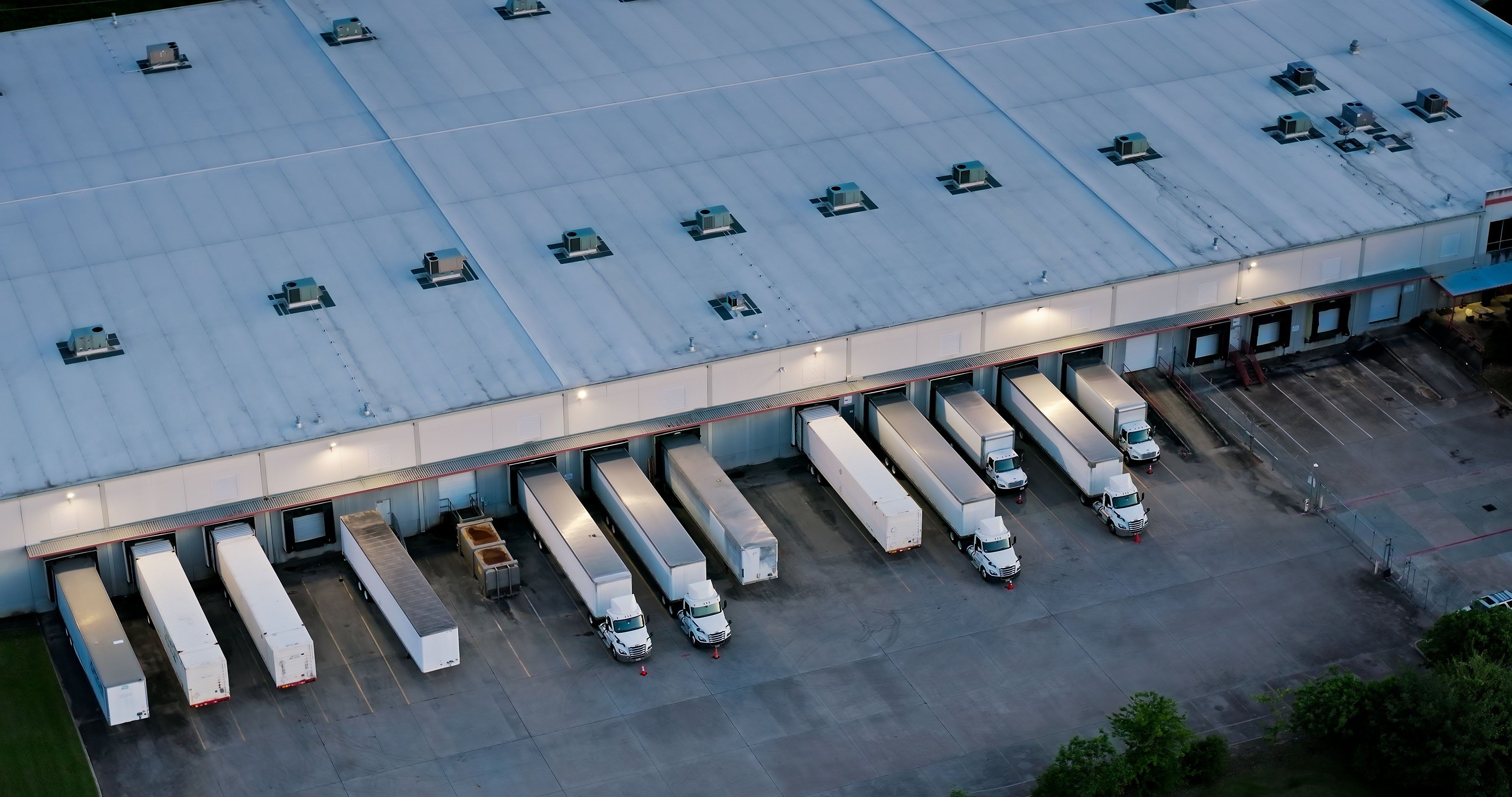
Motor carriers, private fleets and shippers are navigating an increasingly complex operating landscape. Economic pressures, shifting demand patterns and evolving trade policies are shaping the need for transportation and warehouse capacity, and the ability to adapt to capacity fluctuations is crucial to maintaining operations.
Several interconnected factors influence the supply and demand for freight as well as capacity.
Economic growth typically leads to increased demand for goods, driving up the need for transportation services and warehousing space. However, economic slowdowns or inflationary pressures can reduce consumer spending and business expansion, cooling demand for goods and slowing business growth.
Economic optimism directly impacts consumer spending, and confident consumers are more likely to spend money on everything from clothing to cars. Consumer confidence also affects spending on services, travel and entertainment. A shift in consumer sentiment, whether positive or negative, can lead to fluctuations in freight demand.
Housing starts, existing home sales and construction are significant drivers of freight demand. On the housing side, there is an ongoing need for raw materials for new construction, as well as products for home renovations, upgrades and moving. Infrastructure improvements, such as highway and bridge construction, also fuel demand for freight.
Manufacturing levels and factory output influence the amount of inbound and outbound freight at production facilities. Manufacturing can also impact the overall economy, with the National Association of Manufacturers estimating that for every $1.00 spent in manufacturing, there is a total impact of $2.64 to the overall economy.
Trucking has a variety of peak seasons. Historically, the most notable peak typically occurs in the fall as retailers stock up for the holiday shopping season. Even though seasonal surges may be brief, they can strain capacity.
Severe weather events, such as hurricanes or snowstorms, can disrupt expected freight flows and create sudden spikes in demand. Consumers may rush to stock up on groceries or other essentials ahead of an event, and emergency supplies or reconstruction materials can also increase the need for trucking services.
Geopolitical disruptions, trade agreements, tariffs and customs regulations can impact the flow of goods, which directly influences the demand for trucking and warehousing.
Freight rates play a crucial role in influencing trucking capacity. When rates are high, new carriers may enter the market, adding capacity. As rates fall, financial pressures may increase, causing some carriers to leave the market, reducing capacity.
Given the significant number of variables that influence both the supply of and demand for capacity, fleets need to remain agile, especially in an uncertain operating environment.
There are several tools and strategies to help businesses prepare for capacity fluctuations:
Full-service leases provide a flexible way for fleets to replace equipment and adjust capacity without committing to long-term investments in purchased vehicles. This enables businesses to scale their operations up or down in response to demand fluctuations without the capital expenses associated with purchasing new assets.
Rental agreements can provide even more flexibility, allowing fleets to increase capacity for days, weeks or months. If longer-term needs arise, the switch to leasing becomes a welcome option.
The used truck market can offer a cost-effective alternative to new equipment for fleets that prefer to own their assets. Adding used trucks allows fleet operators to meet increased demand quickly. New equipment can come with extensive lead times, but used trucks are often readily available.
Third-party logistics providers help businesses optimize their supply chain and ensure that they have access to the right amount of transportation and warehousing capacity when they need it. Some, like Penske, also have tools to improve efficiency, increase visibility and enable data-driven decision-making.
Freight brokers offer flexible solutions to manage capacity in real time. For shippers, brokers provide immediate access to an extensive network of vetted carriers to fill short-term or unexpected gaps in a shipper’s capacity. Brokerage can also be a valuable tool for fleets that need to access freight.
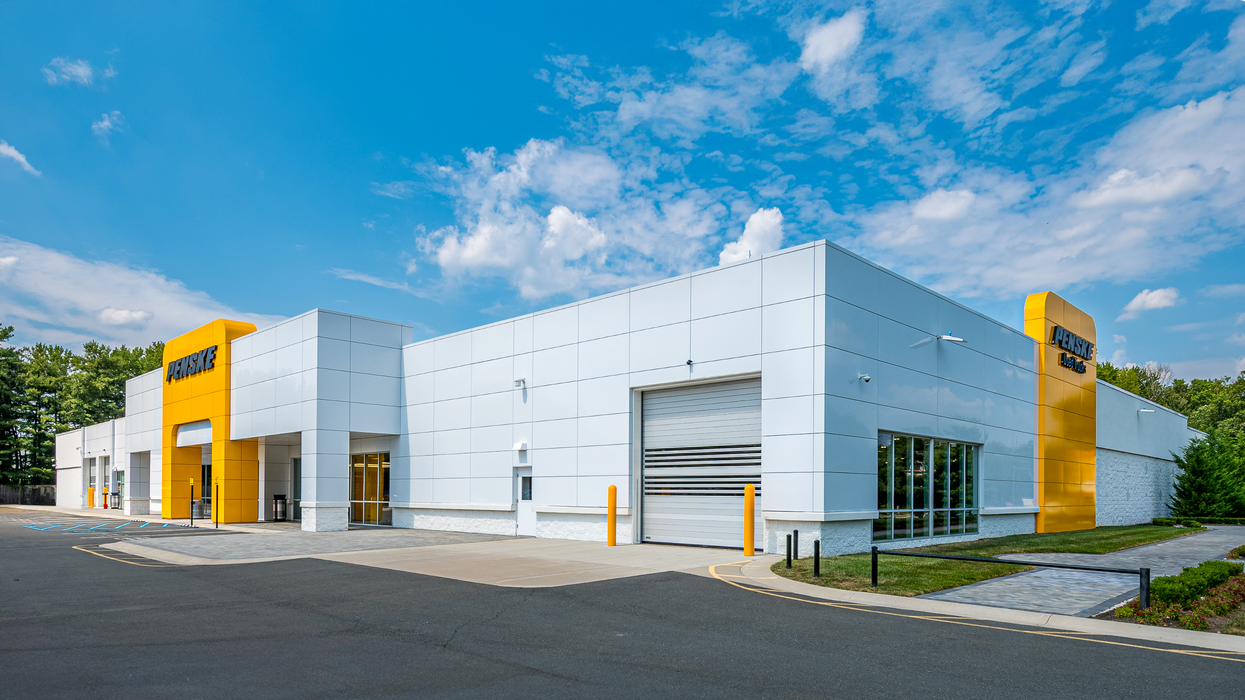
Penske Truck Leasing recently opened a new, facility at 4095 U.S. Route 1 in Monmouth Junction, New Jersey. The reinvigorated 55,000-square-foot multi-use site brings together several Penske business operations for the first time at one location, enhancing access and support for customers in the region.
The newly renovated and well-landscaped Monmouth Junction site features:
“This facility brings together multiple services in a purpose-built, retail-facing environment,” said Tyler Hard, senior vice president for Penske Truck Leasing – Northeast Region. “It’s a practical investment that elevates how Penske delivers rental, resale and collision repair services in one location – while supporting workforce development and meeting customers’ needs in the local market.”
Penske currently employs over 30 associates at the new facility and continues to recruit for roles including collision repair specialists, customer service representatives, and technicians locally and nationwide. For a list of open positions in the Monmouth Junction area and other Penske locations across North America visit penske.jobs for more information.
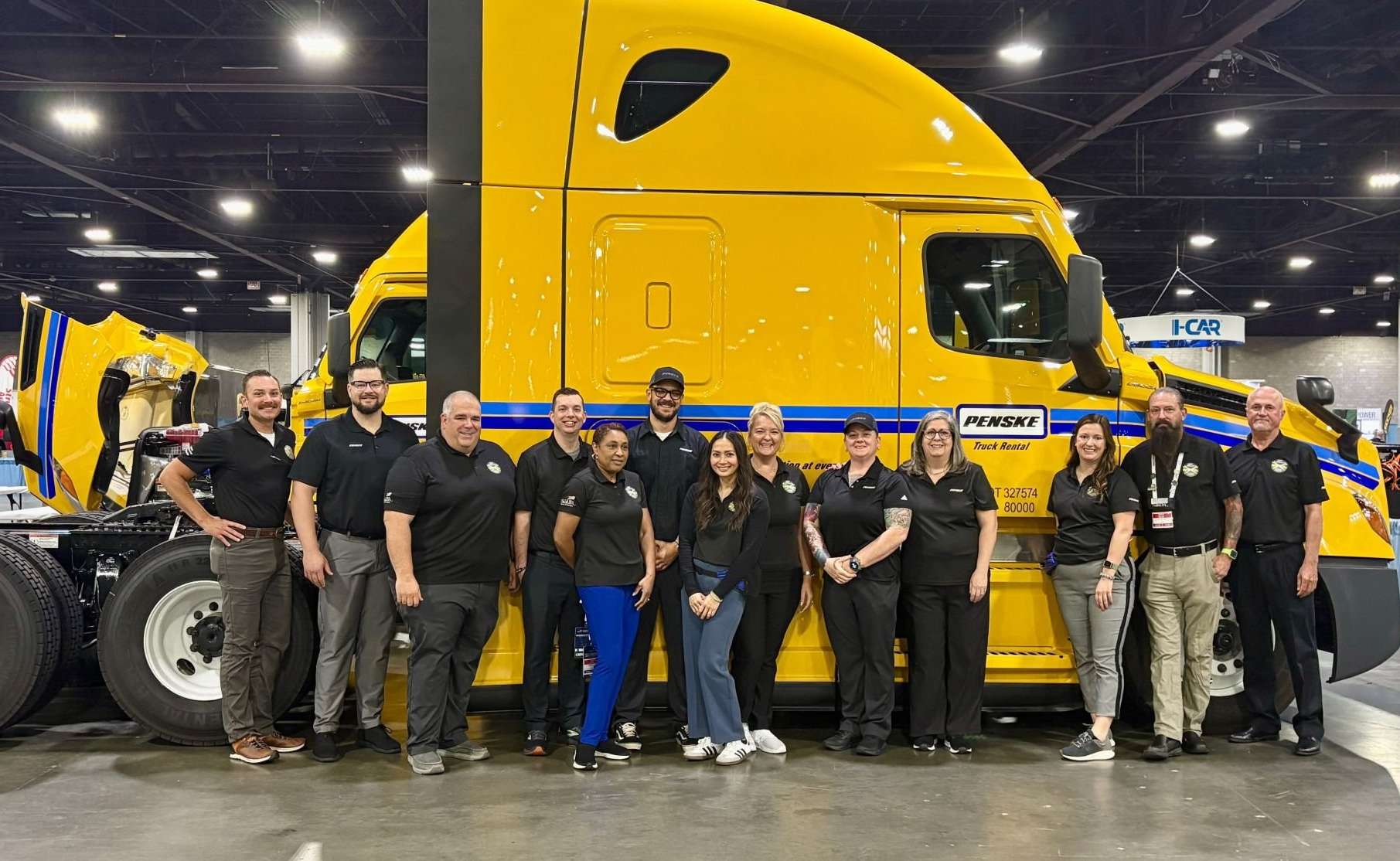
For the 11th straight year, Penske Truck Leasing proudly participated in the SkillsUSA National Leadership and Skills Conference (NLSC) — the nation’s premier gathering for students in technical, skilled and service-related occupations.
This year’s conference brought together over 17,500 attendees and 6,800 student competitors in Atlanta, Georgia. Once again, Penske was there to connect, support and inspire the next generation of diesel and collision repair professionals.
Penske’s presence at NLSC wasn’t just about showcasing trucks and tools — it was about building community, creating career connections, and investing in the future of skilled trades. Students participated in interactive exhibits, experienced live diagnostics and tech demonstrations and engaged directly with Penske recruiters, technicians and mentors.
As Andy Boff, director of collision repair and maintenance initiatives at Penske, said:
“These partnerships are crucial — they show that skilled trades are alive and well, and they give students a chance to get excited about what their future could look like. It’s also a great way for us to hear directly from students about what they want from employers and their careers. SkillsUSA creates that buzz between student and industry.”
In a heartwarming moment, a Penske Snap-on toolbox winner chose to gift her prize to her great-niece, a fellow collision repair competitor, which captured the essence of SkillsUSA: family, mentorship and shared opportunity.
Another proud moment came when SkillsUSA earned national exposure on Fox Business, with a student at our booth proudly representing Penske gear during a live segment, helping to highlight the importance of student-employer connections. Watch the full segment here.
From immersive booth experiences to competition sponsorships and real-world tech demos, Penske’s presence was designed to attract and engage the next generation of talent. We proudly delivered:
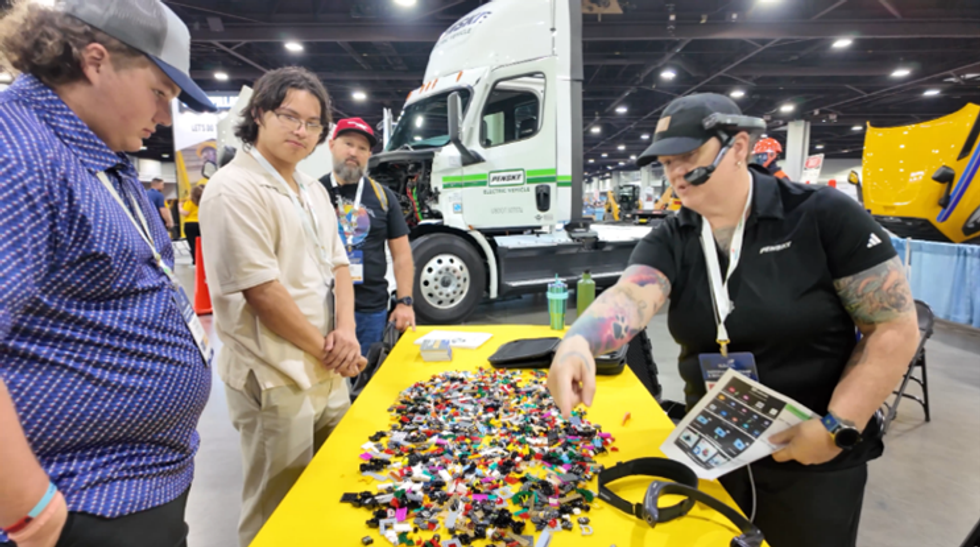
Penske’s booth was designed to give students a realistic, hands-on look at technician careers and innovations driving the industry forward. Highlights included:
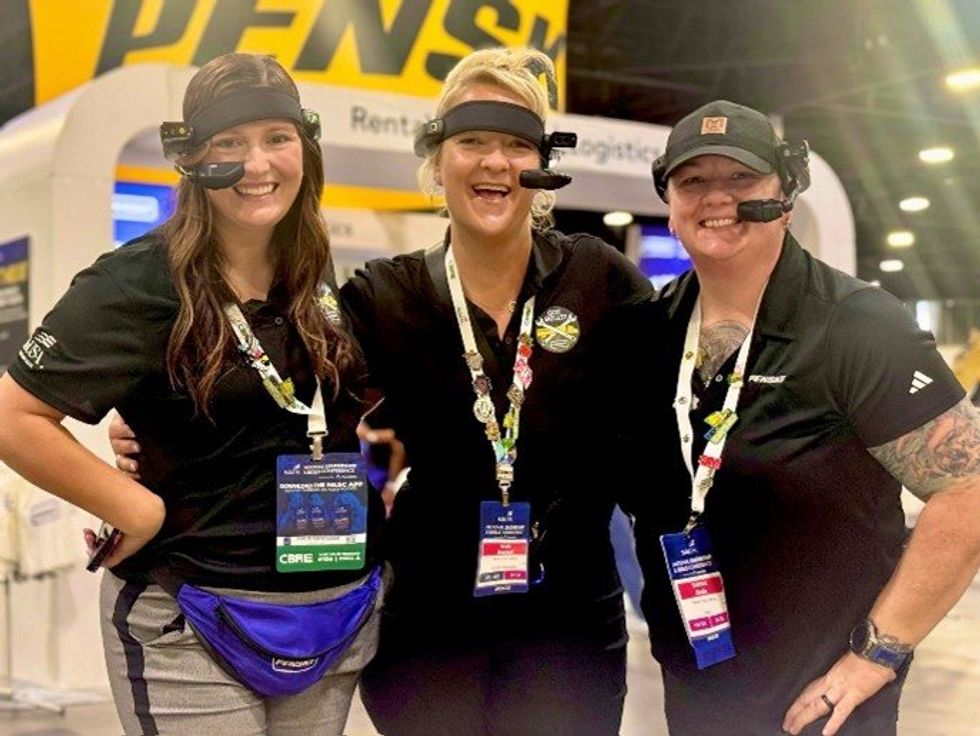
As Rick Labadie, director of staffing for the technician hiring center at Penske, noted:
“The students that are competing at SkillsUSA are the best of the best in their skilled trade throughout the USA. They represent the next generation entering our industry. Penske has been involved with SkillsUSA for many years, and it really takes a village to make this event happen — we’ve built an incredible network through this partnership. Watching students experience our latest tools, trucks and technology firsthand is always rewarding. This event showcases the pride, innovation and potential within our industry.”
This year, Greg Klever, manager of technical schools and partnership programs at Penske, led the integration of emissions technology into the diesel equipment technology technical standards, ensuring the competition reflects current industry practices. Throughout the year, we expanded involvement to 14 state competitions and supported 75 competitors (44 high school and 31 post-secondary). Additionally, we stepped in to run the chassis station at the last minute, following a request from the technical chair, highlighting our team’s flexibility and commitment.
“With this momentum, we’re on track for full implementation of the emissions station in 2026 and beyond. I’m proud to be part of this ongoing growth and grateful for Penske’s support in our efforts with SkillsUSA.”
Key Milestone: Klever was also elected co-chair of the National Diesel Equipment Technology competition, a two-year leadership role that transitions into the chair role and enables Penske to bring feedback from OEMs and school partners to evolve the competition in meaningful ways for 2026 and beyond.
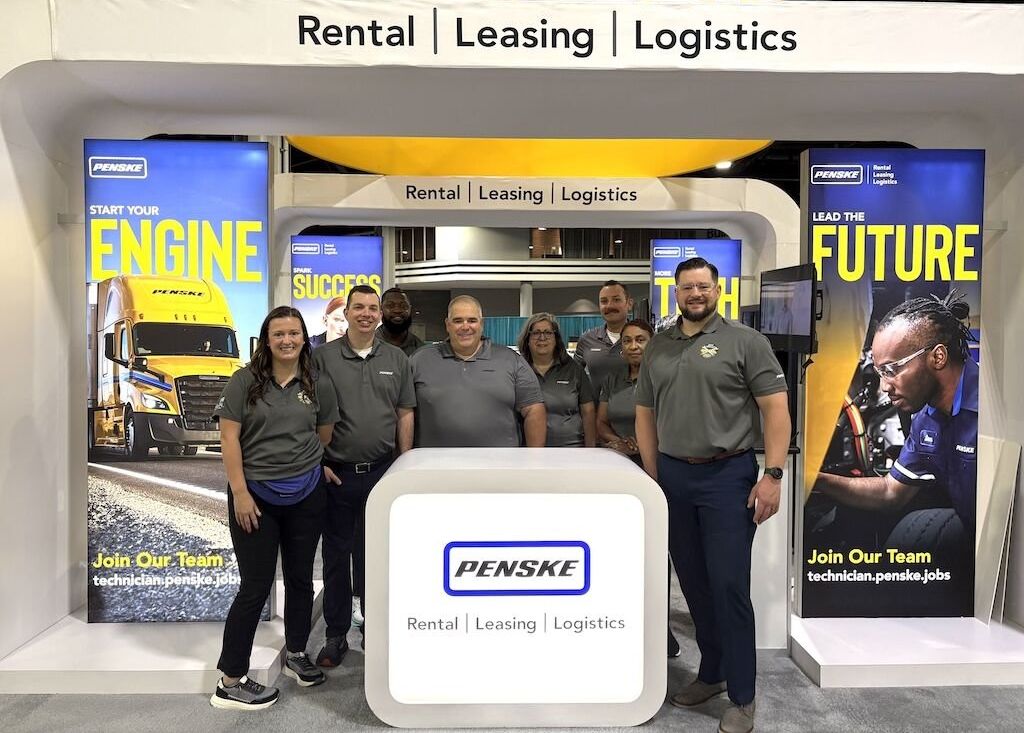
This year reinforced why Penske continues to show up: to create opportunities, celebrate talent and cultivate community and collaboration within the skilled trades industry. We are proud to stand alongside the next generation of technicians, educators and partners who are shaping the future of our industry, and we look forward to continuing our role in powering careers and driving excellence in diesel and collision technology.
To explore technician careers and learn more about opportunities at Penske, visit Penske Technician Jobs.
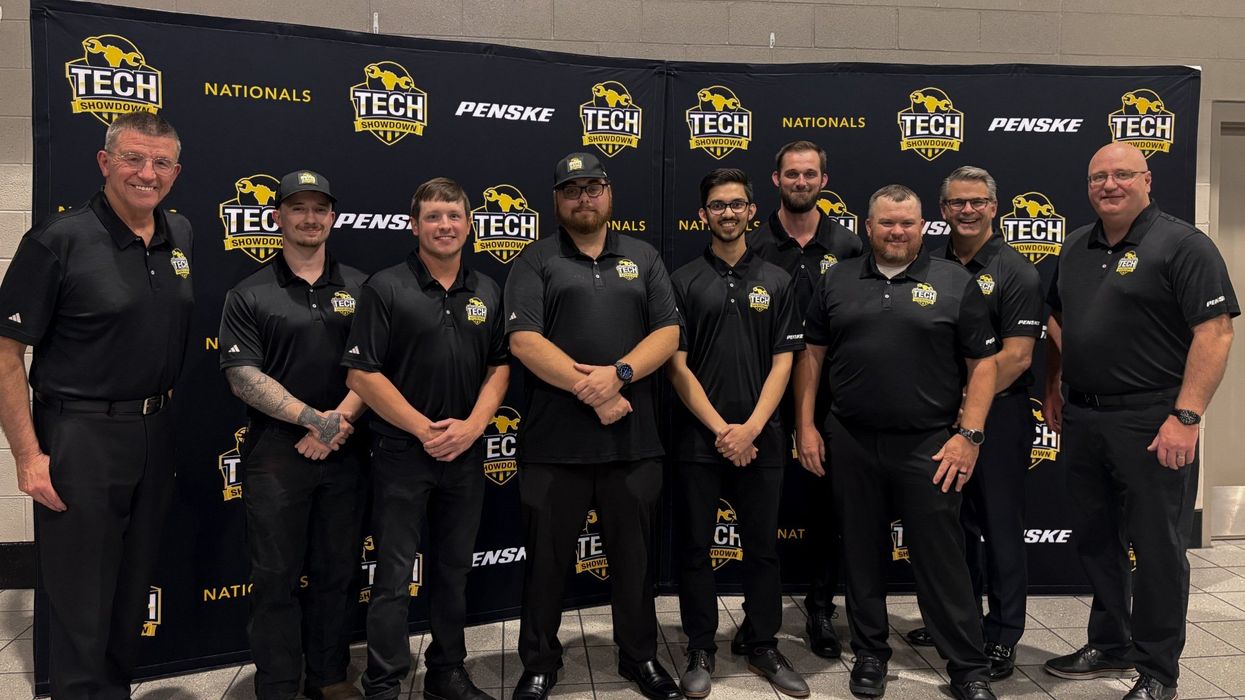
Penske’s top techs and customer service representatives (CSRs) from across the U.S. and Canada went head-to-head in Mooresville, North Carolina, at the 2025 National Tech Showdown.
The National Tech Showdown celebrates the skill, speed, and expertise of Penske’s frontline maintenance team with 44 finalists competing after eight weeks of local and regional challenges.
This year’s milestones:
The format:
Two tracks tested bumper-to-bumper knowledge:
On June 12, all finalists completed a 25-minute online exam, and a one-hour, hands-on assessment focused on real-world performance.
“The Tech Showdown is a reflection of the discipline and expertise our maintenance teams bring to work every day,” said Art Vallely, president of Penske Truck Leasing. “It’s an opportunity to recognize the precision and focus that keep our customers moving and our operations strong. They are the best in the business!”
Top 2025 Finishers:
Tech Pro
PM Plus
Penske’s commitment to technician training and growth spans more than 11,500 maintenance associates across North America.
“This competition is built to reflect the grit, pressure and real-world challenges our teams face,” said Holly Gerke, vice president of maintenance development and technical training. “These finalists have trained, adapted and executed with accuracy. It shows the strength of their preparation and the value of continued learning across our organization.”

Supply chains often face threats of disruption, from labor shortages to shifts in consumer demand and changes in available capacity. Climate-related challenges and geopolitical tensions, combined with shifting trade regulations, are also introducing potential disruptions by increasing transit times, capacity constraints and rate volatility.
“While uncertainty is still a prevalent phenomenon, one thing remains certain: volatility is here to stay. The key will be to ensure supply chains become more agile and robust,” according to CSCMP’s 2025 Annual State of Logistics Report.
An Economist Impact survey found that 55% of executives expect major disruptions in 2025. Supply chains need to adapt and endure, which increasingly means they need to be resilient and ready for the unexpected. This growing awareness is pushing many businesses to reevaluate how they plan, source and operate across their networks.
As conditions grow more complex, smart planning and flexible strategies are essential. Here are several strategies manufacturers, distributors, retailers, and fleets can use to future-proof their supply chains.
How fleets acquire, maintain and divest equipment directly affects their operational and financial performance, and fleet optimization begins with understanding how to match assets to operational needs. By analyzing historical, real-time and forecasted data, companies can determine the right mix and size of equipment needed.
Private fleets often rely on a blended strategy of leases, rentals and owned equipment to meet shifting capacity demands, lifecycle planning and evolving technology requirements. According to the 2024 National Private Truck Council Benchmarking Survey, 34% of fleets use a combination of ownership and leasing of heavy-duty equipment. Slightly more, 38%, own most of their equipment, and 28% lease all or most of their heavy-duty units.
An optimized supply chain network provides stability during disruptions and allows companies to scale as opportunities arise. We use advanced modeling tools to design the ideal logistics networks based on shippers’ priorities and operations.
Network design considers several factors, including various port, warehouse and supplier configurations, to identify ideal sourcing and storage locations and eliminate inefficiencies, reducing costs and improving delivery times.
At a tactical level, network design also identifies opportunities to cut costs and improve service levels. Examples include consolidating shipments and optimizing routes based on the time of day, traffic patterns and real-time weather or traffic disruptions.
The State of Logistics Report found that network design is shifting from a three-year effort to a more continuous exercise, aimed at keeping pace with the rate of change and volatility, and helping to future proof supply chains and your businesses against disruption.
Transparency enables agility, and real-time visibility allows shippers to identify risks early and make proactive adjustments, such as rerouting freight, sourcing from another warehouse or moving up a shipment. Visibility also supports smarter inventory management, helping companies determine optimal reorder points and the most strategic sourcing locations.
Supply chain visibility, real-time tracking and reliable data are essential for companies focused on keeping inventory levels low. When various links in the supply chain are connected, technology can combine data on inventory with supplier lead times and anticipated demand to improve decision-making, making a just-in-time approach possible. Improved visibility is a powerful way to future proof freight flows and inventory strategies.
Trucking and supply chain operations are generating significant amounts of data from vehicles, engines, telematics devices, routing software and more. Artificial intelligence and machine learning can process massive amounts of data quickly to identify patterns and uncover correlations that humans might miss, enabling smarter and faster decisions. Fleets can use the information to enhance truck efficiency and get a comprehensive picture of their operations. AI is also being used to improve efficiency in warehouses and the yard, and to automate supply chain management tasks.
We use AI in several applications. Fleets can use Catalyst AI™ to improve miles-per-gallon and utilization. Our logistics company, Penske Logistics, utilizes AI-enabled yard management tools to automate trailer check-ins and check-outs, thereby increasing visibility into trailer locations and statuses, and streamlining yard operations while reducing manual errors. Other examples include network and route optimization, warehouse automation and more.
The State of Logistics Report noted that AI is no longer an emerging trend and AI-driven innovations are tools to enhance efficiency and resilience.“ As adoption accelerates, companies that embrace AI-driven efficiencies today will be best positioned to lead the next era of freight transportation,” researchers wrote. AI-enabled tools are quickly becoming must-haves for companies working to future-proof their supply chain.
Overreliance on a single supplier or geographic region can leave businesses vulnerable. To reduce risk, many companies are reevaluating supplier locations and adding new sources of supply for critical components and materials. According to the State of Logistics Report, 36% of shippers are embracing friendshoring, 32%, are creating parallel supply chains and 29% are expanding into neutral markets.
These sourcing strategies help ensure products are available as needed, without overstocking, but they also require adaptable logistics support. Penske helps businesses stay agile with a nationwide network of transportation options, making it easier to shift resources as supplier networks evolve.
Shippers and transportation providers can access capacity in several ways, both for long-term needs and short-term capacity surges. Fleets with in-house transportation can secure rental trucks and short-term leases to meet short-term spikes in demand. Utilizing long-term leases or purchasing used trucks can support sustained demand.
Companies can also turn to logistics providers to access capacity through for-hire or dedicated fleets, or on the spot market via freight brokerage. As a broker, we have access to a large pool of Penske-qualified carriers, which enables us to find the best rates and value. Our carrier sourcing solutions have saved millions of dollars in transportation costs by reducing rates and offering better carrier selection. In addition, we have the processes in place to add new carriers in 30-45 minutes.
Trailers offer a scalable solution to meet shifting transportation capacity or storage needswithout the commitment and cost associated with adding trucks or leasing warehouse space. They can be added to an existing fleet to increase capacity, create trailer pools or serve as temporary warehousing solutions. Incorporating trailers into your fleet strategy is another way to add agility and future proof freight handling.
Having a plan in place before it’s needed allows companies to pivot quickly if something unexpected occurs. Contingency planning is often associated with adverse events, such as extreme weather or global disruption, but it can also be helpful when new opportunities arise. Plans should evaluate solutions related to transportation, warehousing and fulfillment.
Developing alternative routes, maintaining backup suppliers and leveraging technology to simulate “what-if” scenarios are critical elements of preparedness. Being ready to act fast ensures companies aren’t losing market share as demands shift or disruptions occur.
Future proofing your supply chain starts with the right partner. We bring decades of experience, nationwide infrastructure, and advanced fleet and supply chain technology to help businesses stay agile, flexible and prepared.
In addition to full-service short- and long-term truck leases at Penske Truck Leasing, we have more than 85,000 commercial rental vehicles available through Penske Truck Rental, including high-roof cargo vans, straight trucks with liftgates, Class 8 tractors, and dry van, flatbed and refrigerated trailers.
For companies looking to expand or refresh their fleet with greater control, Penske Used Trucks offers well-maintained vehicles backed by strong maintenance records and transparent pricing.
Additionally, Penske Logistics provides transportation and warehousing solutions across the supply chain, including dedicated transportation, transportation management, distribution center management and supply chain management.
We are also investing heavily in technology to increase visibility, break down silos and improves decision-making.
From planning and capacity to technology and visibility, we help you future proof your supply chain every step of the way.
Regardless of where you begin, each part of your transportation strategy helps to build a more flexible and resilient supply chain. From acquiring the right vehicles to optimizing your logistics network, our business lines offer targeted solutions to help you stay ahead. Explore how each one supports your future proofing strategy:

With forecasters predicting an above-normal Atlantic hurricane season, fleet operators are encouraged to take steps now to prepare in the event strong storms impact your area.
The Atlantic hurricane season began Sunday, June 1 and ends Sunday, Nov. 30, but the season historically peaks between mid-August and mid-October.
Along with high winds, hurricanes can cause flooding and storm surges. If your area is affected by these conditions, planning ahead can potentially save your business and your life.
Penske has tips and resources available to help you prepare for a hurricane and guidance before, during and after a storm.
The 2024 season saw 18 named storms form with winds of 39 mph or greater. Eleven of the storms became hurricanes with winds of 74 mph or greater, and five strengthened to major hurricanes with winds reaching 111 mph or greater, according to the National Oceanic and Atmospheric Administration (NOAA).
The season included three record-breaking storms: Hurricane Beryl, the earliest Atlantic basin Category-5 hurricane on record; Hurricane Helene, which made landfall as a Category-4 storm on the Florida Gulf Coast and Hurricane Milton, which resulted in a tornado outbreak that produced 46 tornadoes and caused torrential rainfall and localized flooding.
NOAA’s outlook for the 2025 Atlantic hurricane season predicts a 30% chance of a near-normal season, a 60% chance of an above-normal season, and a 10% chance of a below-normal season.
The forecast includes a prediction of between 13-19 total named storms with 6-10 forecast to become hurricanes. NOAA predicts 3-5 will form into major hurricanes.
The Department of Homeland Security, through its Ready national public service campaign, has assembled some hurricane preparedness tips for every stage of the storm. It includes evacuation tips, what to include in a disaster supply kit and how to create a family communication plan.
Penske offers the following advice to consumers and Penske customers on what to do before a storm arrives:
Important: If you suspect your vehicle may have been flooded do not start the vehicle. Starting the vehicle may cause significant damage to the emission control system. Contact your local Penske service location or 24/7 Roadside Assistance for guidance.
Penske takes steps to ensure continued service, but there are times when delays and closures may be necessary due to travel restrictions, weather conditions, power outages or a state of emergency. Please call our 24/7 Roadside Assistance team at 1-800-526-0798 to confirm the open or closed status of a Penske facility.
By “Move Ahead” Staff
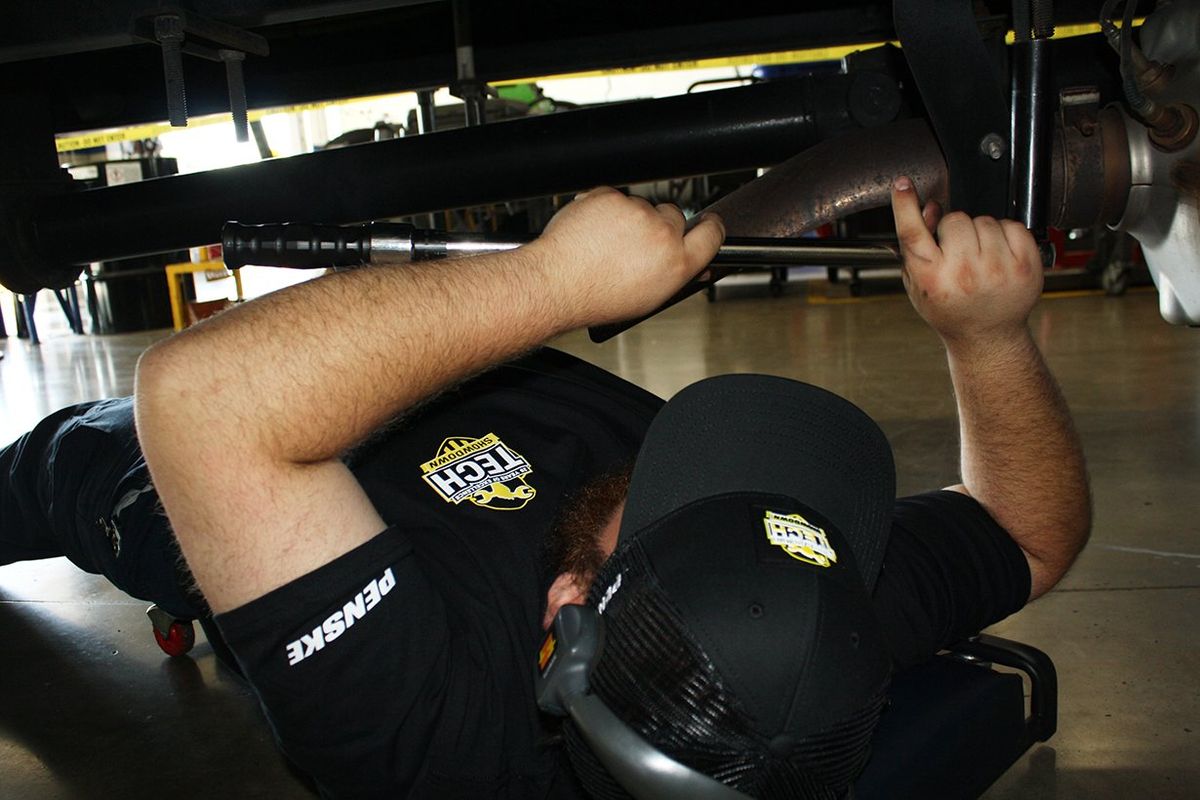
What started with nearly 3,000 competitors has come down to just 44 of Penske’s skilled maintenance technicians and preventive maintenance professionals. These standout finalists are headed to the 2025 National Tech Showdown – a high-stakes competition that celebrates the precision, expertise and pride of our frontline service teams.
“Tech Showdown is more than a contest – it’s a celebration of the talent, expertise and dedication that powers our business every day,” said Art Vallely, president of Penske Truck Leasing. “This year’s event raises the bar, sets a new standard for excellence and further emphasizes our deep commitment to investing in and developing our maintenance team.”
Over the past eight weeks, competitors moved through district and area competitions that tested their technical knowledge and problem-solving abilities through a mix of online exams and hands-on challenges. The top performers from each area earned their spot at Nationals, where they’ll compete for the top honor and unprecedented awards.
This year brings several exciting milestones. Three women are among the national finalists – a first in Tech Showdown history. Seven competitors are returning after participating in the 2023 competition. And for the first time, 12 additional finalists have been awarded Golden Pit Passes – special invitations recognizing their performance and potential.
Now in its 25th year and with the largest award pool in program history, the final round takes place June 12 at the Team Penske racing headquarters in Mooresville, North Carolina.
Want a closer look at the action? Follow along on social media as we celebrate our finalists and share more from Mooresville as the road to Nationals reaches the finish line.
By: Caitlin Stibitz
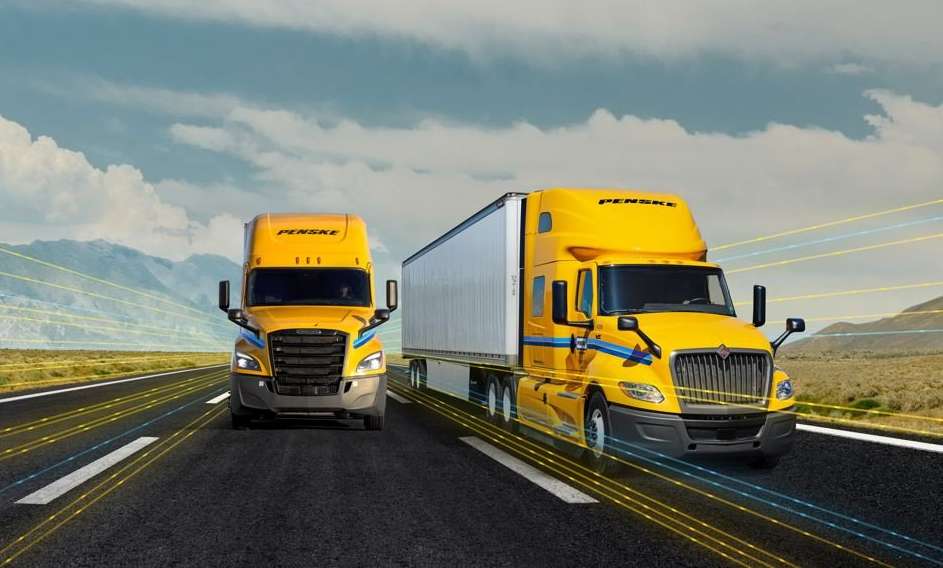
Penske Truck Leasing today launched the latest evolution of Catalyst AI™, the artificial intelligence engine transforming commercial fleet management. Built in-house and powered by over 100 billion data points and more than 300 real-time models, Catalyst AI marks a major leap in data-driven decision-making — from the individual vehicle to the entire hub.
This release expands the platform’s ability to generate fast, meaningful, and scalable insights, helping fleet professionals act on data with unmatched precision.
“The new release marks a next chapter for Catalyst AI—one that makes complex data more usable, more scalable, and more actionable,” said Art Vallely, president of Penske Truck Leasing. “We’ve enhanced the platform’s ability to surface trends, benchmark at the vehicle level, and identify meaningful outliers across fleets and facilities. Built in-house, the platform was designed to help our customers spend less time chasing data and more time improving performance.”
Catalyst AI now includes four core enhancements:
This update reflects Penske’s commitment to giving fleets greater control over their operations — from trend detection to actionable benchmarking.
“Catalyst AI gives fleet managers the data they need at their fingertips to run the operation and know exactly where they stand. It lets us see how we’re performing against the market in real-time,” said Brian Harper, fleet operations leader at Darigold, an early adopter of the platform. “The data surfaced through Catalyst AI has already supported internal reporting and opened opportunities to reduce costs and reevaluate how we measure success. Penske’s at the tip of the spear with this kind of information,” he continued. “And I’m glad to be in front of it with them, rather than behind it.”
According to Penske’s 2025 Transportation Leaders Survey: A Road to AI Adoption, AI is seen as critical for resilience and adaptation in transportation:
Yet, 84% of transportation leaders say the industry is behind, and 36% feel only somewhat prepared for continued disruptions. These findings underscore the growing urgency for AI tools that deliver both visibility and measurable outcomes.
“We’ve designed Catalyst AI with our customers’ needs in mind,” said Sherry Sanger, executive vice president of strategy and marketing at Penske Transportation Solutions. “Catalyst AI represents a strategic leap forward in how fleets use data. It’s not just about visibility—it’s about empowering smarter decisions across the entire network with technology that works in the real world.”
“Catalyst AI now analyzes over 100 billion data points annually,” said Tim Haynes, vice president of digital and customer data at Penske. “We’ve engineered a system that runs more than 300 models in real time—delivering comparison logic, trend detection, and scoring that is both scalable and immediate. This release reflects the technical backbone required to help fleets benchmark smarter and respond faster.”
Catalyst AI is embedded within Comparative Insights, a feature of Penske’s Fleet Insight® digital platform. While fleet-level insights remain free to customers, new Comparative Insights Premium unlocks deeper comparisons and access to the new Fantasy Fleet — available with a 30-day free trial.
Visit penskecatalyst.ai to learn more and start your journey with Catalyst AI.
By: Tana Korpics
The transportation and logistics sector is moving past AI curiosity and into real-world application. According to Penske’s newly released 2025 Transportation Leaders Survey: A Road to AI Adoption, fleet leaders are steadily embracing artificial intelligence (AI) and seeing measurable returns — even as traditional practices and implementation concerns linger.
In what marks a turning point for the industry, 70% of companies now report adopting AI solutions — up 17 percent from 2024. And that investment is paying off. Fleet executives cite improvements in fleet planning (36%), route optimization (35%), and operational efficiency (34%) among the top gains realized over the past year.
But the transformation is just beginning. While optimism is growing, 84% of executives still believe the industry lags behind others in adopting AI — up 20 percent since 2024. The results paint a picture of an industry gaining confidence in AI’s value while acknowledging the work ahead to fully harness its potential.
The data reveals a shift from theoretical benefit to tangible impact. About four in ten respondents say their organizations have achieved at least 50% savings in fuel costs, operational expenditures, and distance traveled through AI-powered route optimization.
Leaders are also seeing gains in driver safety, customer satisfaction, and visibility across the supply chain — a clear sign that AI is becoming integral to fleet operations. And this momentum isn’t isolated. More than nine in ten (91%) of executives believe organizations that adopt AI are better positioned for future growth.
While leaders recognize how AI can help future-proof their operations, many are still struggling to navigate current challenges. Rising costs (52%), supply chain disruptions (45%), and managing fleet operations (40%) continue to challenge executives. In fact, fleet operations jumped 10 percent as a top concern year-over-year, indicating increasing complexity as fleets grow and customer expectations rise.
The report also highlights a stark contrast between innovation and legacy mindsets: 94% of respondents still rely on traditional annual forecasting to guide fleet planning. At the same time, nearly all (97%) agree that benchmarking with real-time data is becoming essential to navigate economic uncertainty and sudden market shifts.
One promising insight: leadership is largely on board. 93% of respondents say their senior teams understand the value AI brings to supply chains and fleets. And looking ahead, 91% agree it’s critical for the next generation of fleet and logistics professionals to be equipped with AI-enabled skills and tools.
However, concerns around AI’s risks haven’t diminished. Security risks (49%), limited regulation governing (36%), and fears of unethical use (35%) are top of mind. These findings highlight the need for strategic, responsible adoption that balances innovation with transparency and trust.
The 2025 survey makes one thing clear: AI is no longer a concept on the horizon — it’s a practical tool reshaping how fleets operate. Organizations that have embraced AI are already reaping the benefits, and the foundation is being laid for broader, more transformative adoption in the years ahead.
As the industry continues to evolve, success will hinge on bridging the gap between emerging technology and traditional practices, all while building trust in the systems that drive the future of fleet management.
By: Tana Korpics
Survey Methodology – The second edition of The Transportation Leaders Survey: A Road to AI Adoption was conducted online by Big Village among a sample of 255 U.S. adults 18 years of age and older who are owners, founders, or executive leaders or decision makers of a Transportations or Logistics businesses. This survey was live April 16-23, 2025
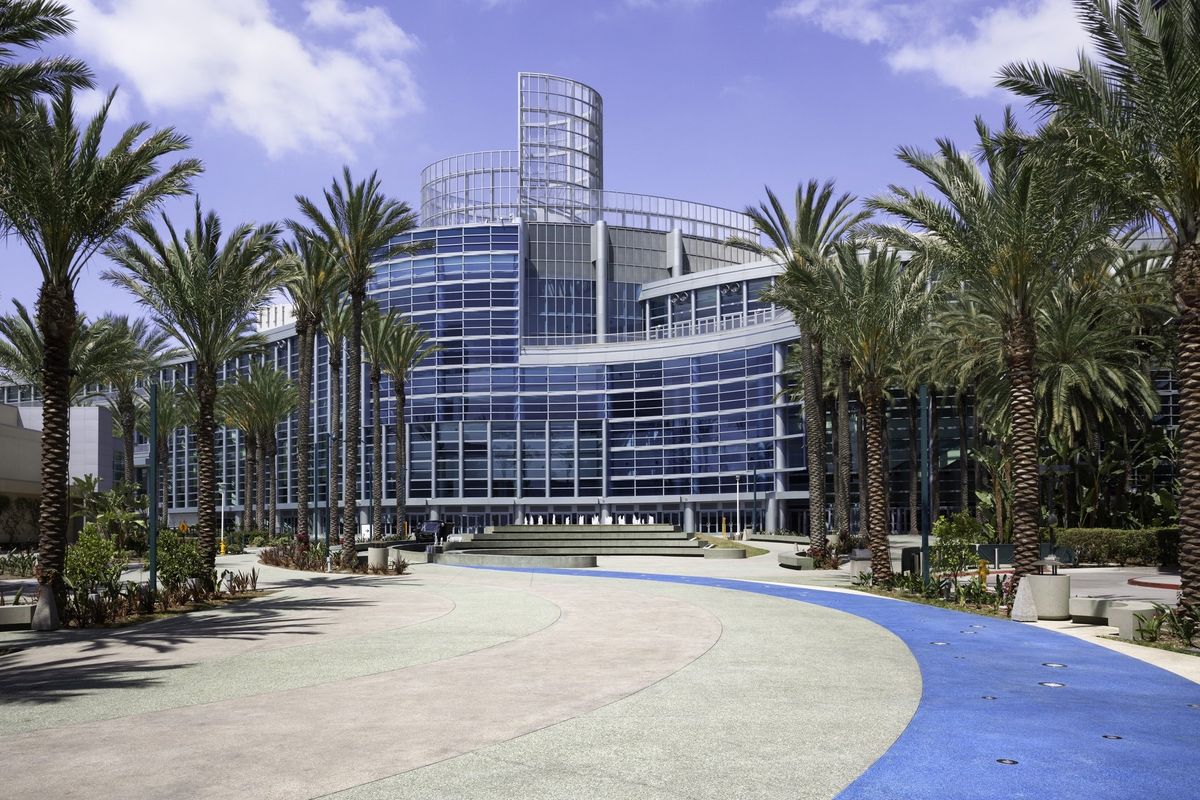
The 2025 Advanced Clean Transportation Expo returns to Anaheim, California, later this month, and with it comes an increased presence for both Penske Transportation Solutions and Penske Energy. ACT Expo will take place at the Anaheim Convention Center on April 28.
Penske Transportation Solutions will be exhibiting in booth 5620 and Penske Energy will be on display right next door in booth 5833.
Penske Transportation Solutions will once again serve as a conference Presenting Sponsor and as a State of Sustainable Fleets Market Brief Title Sponsor (the 2025 publication debuts on April 28 at no cost).
A half-dozen Penske leaders will take part in educational sessions.
Monday, April 28
• David Battisti, executive vice president and general counsel, will be a panelist for a session that highlights the role of regulations in the advancement of industry sustainability efforts, as part of the policy workshop.
• Sherry Sanger, executive vice president of strategy and marketing, will discuss the company’s work with AI, that includes its Catalyst AI offering, and its usage in commercial transportation.
• Travis Hill, Penske Energy managing director, will be a moderator for a discussion on rapidly developing charging stops.
• Ivet Taneva, vice president of environmental affairs, will moderate a session about carrier strategies to reduce emissions.
Tuesday, April 29
• Volvo is hosting a special event in its booth, a discussion of the new State of Sustainable Fleets Market Brief, with Paul Rosa, senior vice president of procurement and fleet planning, slated to take part.
Wednesday, April 30
• Hitachi is leading a session inside the exhibit hall’s new Showfloor Theater on the unexpected challenges that can be found in the electrification journey. Sean Yentsch, vice president of facilities, will offer his learnings.
By “Move Ahead” Staff
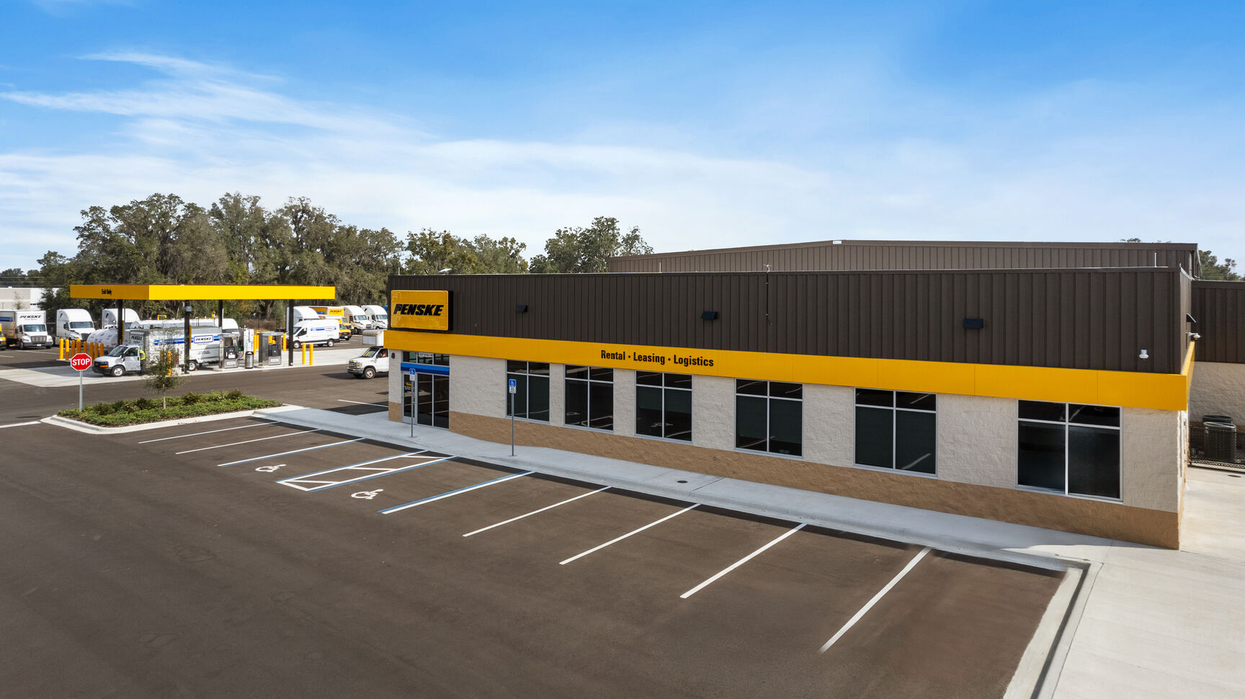
Penske Truck Leasing has opened a new facility at 633 NW 50th Avenue in Ocala, Florida. The new location, situated near Interstate 75, expands Penske’s capacity to serve customers and meet growing demand in the region.
The 20,864-square-foot facility sits on 8.62 acres and features five drive-thru bays with 10 service areas, an automated wash bay, and a full-service fuel island. The location provides consumer and commercial truck rental, full-service truck leasing, and contract truck fleet maintenance.
“The new Ocala facility reflects our commitment to investing in infrastructure that supports both our customers and associates,” said Paul Johnson, area vice president – Florida, for Penske Truck Leasing. “With expanded capabilities and advanced technology, we are better positioned to meet the region’s transportation needs efficiently and reliably. This facility also enhances our ability to provide seamless service for both consumer and commercial customers in a rapidly growing market.”
Penske’s previous Ocala facility operated on a 2.5-acre site with limited parking and three service bays. The new facility’s expanded space addresses these constraints while incorporating Penske’s proprietary fully digital and voice-directed preventative maintenance process and Penske digital experience solutions, enabling customers to utilize advanced onboard technology systems, including electronic logging devices (ELDs), telematics and onboard cameras.
With its proximity to major transportation routes, the Ocala facility is positioned to serve the area’s growing population and commercial activity. It is designed to enhance service capabilities and provide the infrastructure needed to support future demand.
Penske currently employs over 50 associates at the new facility and is hiring locally and nationwide. For a list of open positions in the Ocala area and at other Penske locations across North America visit gopenske.com/careers for more information.