Safety Spotlight: Hazardous Materials Guidance
Penske reminds consumers that under its rental agreement flammable, explosive or otherwise hazardous materials may not be transported in its rental vehicles.
Penske reminds consumers that under its rental agreement flammable, explosive or otherwise hazardous materials may not be transported in its rental vehicles.
Heat and humidity can have an impact on items kept in enclosed spaces such as a rental truck, so great care should be taken when packing items into the truck.
Consumers should avoid transporting items such as propane tanks, paint thinner, pesticides, oil based paints, fertilizer, charcoal, gasoline or kerosene cans and lighter fluid.
Fireworks are considered a Class 1 hazardous material by the Federal Motor Carrier Safety Administration. There are federal regulations that apply to rental truck operators regarding the transportation of hazardous materials.
A general rule of thumb is that all appliances or machinery that hold gasoline or oil should be completely drained before they are loaded into a truck.
You should also avoid packing any type of combustible or highly flammable items like aerosol cans and lighter fluid.When packing items like a gas generator, lawnmower, snowblower or weed whacker, make sure to drain the gasoline and oil completely until the tank is dry. Any amount of gasoline and oil can lead to build-up of highly combustible vapor.
When packing your truck, we recommend avoiding the following additional items:
Aerosols, ammunition and guns, antifreeze, automobile batteries, cleansers containing bleach or ammonia, compressed gasses, hazardous waste, marine pollutants, matches, nail polish remover, oil or gas, paint cans, rubbing alcohol, signal flares, and weed killer.
If you have questions about whether specific items are hazardous, or you have general questions about what you are allowed to pack into your moving truck, then contact your local branch of the Department of Transportation or a moving advisor at Penske Truck Rental.
Taking these necessary steps is vital to protect yourself and your property. It is also important to your rental truck and the safety of other drivers on the road.
Have a question or want to reserve your next Penske moving truck? Contact the experts at Penske Truck Rental by calling 1-888-996-5415 or chat live with a Penske representative by clicking here.
By "Move Ahead" Staff
 The U.S. Department of Transportation’s Federal Motor Carrier Safety Administration has removed the majority of information on motor carriers’ Compliance, Safety, Accountability scores from public view as a result of the latest highway bill—
 This measure was one of several directly related to the trucking industry that was included in the $305 billion highway bill, which was the longest surface transportation bill in more than ten years. The FAST Act provides $227 billion for highways and $61 billion for transit and guarantees funding for transportation programs through 2020. It also creates a new multimodal freight policy and a national freight strategic plan.
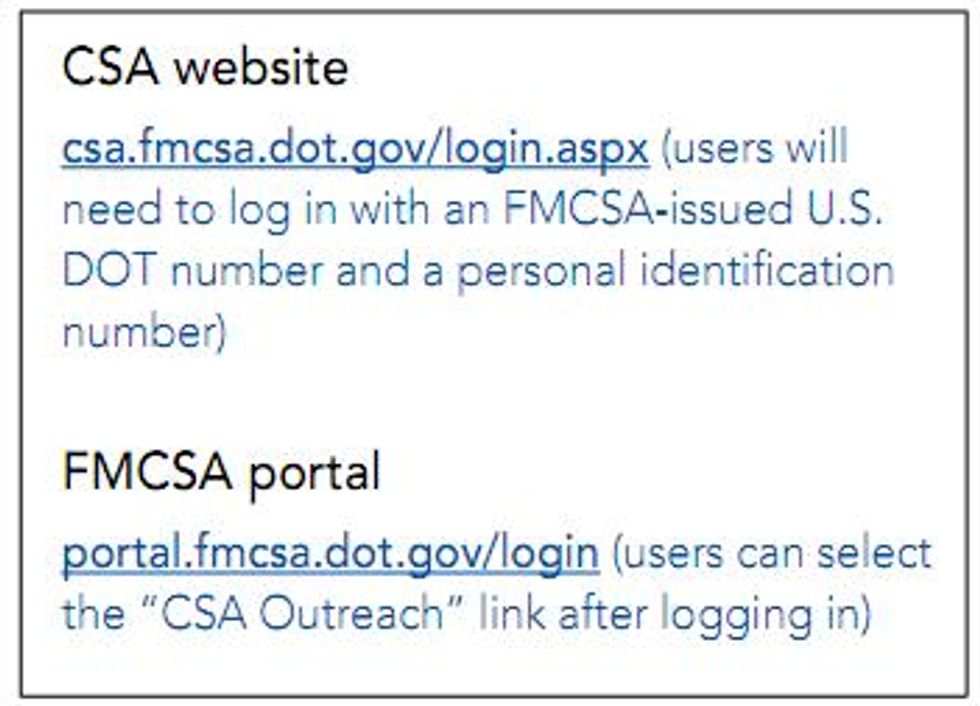 FMCSA will also be renaming the Cargo-Related BASIC to the Hazardous Materials (HM) BASIC, which will better identify HM-related safety problems and change how HAZMAT carriers are classified to allow for increased intervention scrutiny. Now HAZMAT violations will be placed in the HAZMAT BASIC, which will better identify HAZMAT-related safety problems and change how HAZMAT carriers are classified to allow for increased intervention scrutiny. The HAZMAT BASIC will include items such as placarding and paperwork violations.