Idle equipment, underutilized drivers, inefficient routes, excess inventory, unplanned maintenance and reactive decision-making can quietly erode margins and profitability over time often without triggering any immediate concern.
A truck sitting too long at a dock, a route with unnecessary miles or inventory stored in the wrong location may seem like minor inefficiencies, but they accumulate. And the longer they go unaddressed, the more they cost.
As transportation networks grow more complex and operating costs stay elevated, uncovering and eliminating these hidden expenses is essential to protecting fleet and supply chain performance.
The Cost of Inefficiency
Hidden costs often stem from inefficiencies that appear to be a normal part of day-to-day operations, which is exactly what makes them easy to overlook.
Take equipment utilization. A fleet may have enough equipment to meet demand, but consistently low utilization means paying for assets that aren’t generating revenue. Ineffective maintenance practices compound the problem and can lead to increased fuel consumption, higher repair costs and more downtime. Unplanned repairs are also typically more expensive than scheduled preventive work and the frustration they cause drivers can contribute to higher turnover.
Driver behavior adds another layer of cost. Excessive idling, hard braking and inefficient speed management can increase fuel consumption by 10-15% or more compared to optimized driving habits – a meaningful hit to the bottom line that often goes untracked.
Shippers face similar challenges. Inventory stored in the wrong locations increases transportation costs, while freight moving through outdated routes may no longer align with where customers actually are. Overstocking creates a double burden: higher warehousing expenses and increased carrying costs.
For carriers and shippers, a lack of real-time visibility into shipment status drives inefficiency across the board, leading to manual check calls, reactive rerouting and last-minute decision-making. At the same time, unplanned downtime can reduce asset utilization, increase overtime and impact customer service levels.
Are Hidden Costs Affecting Your Operation?
Before carriers and shippers can address hidden costs, they need to know where to look. The following questions can help reveal areas of opportunity:
- Do you know your current empty mile percentages or equipment utilization rates? Low visibility into these numbers often means money is being left on the table.
- Can you see dwell time by location? Excessive wait times at docks and yards are a direct cost that frequently goes untracked.
- How does your fleet’s fuel economy compare to similar fleets? Significant gaps often point to deferred maintenance or driver behavior issues.
- Is your inventory positioned to minimize transportation costs? Poor positioning creates unnecessary miles and inflates carrier spend.
- How much time does your team spend on reactive decisions? Check calls, emergency rerouting and last-minute capacity sourcing are symptoms of a visibility gap and can add up.
If any of these questions are difficult to answer, that uncertainty is itself a cost. The good news: data and visibility tools can help address all of it.
Visibility Creates Opportunity
Reducing hidden costs starts with identifying where they exist. With the right data, analytics and visibility tools, companies can uncover inefficiencies that would otherwise go unnoticed.
For example, fleet utilization reports can reveal underused assets. Maintenance data can highlight recurring issues that drive up operating costs. Transportation and network analytics can uncover routing inefficiencies, empty miles and opportunities to improve asset productivity. Each of these insights represents a direct path to cost reduction.
Technology is making it easier to identify these opportunities. Artificial intelligence, predictive analytics and real-time visibility tools allow transportation providers and shippers to move beyond reactive decision-making and proactively address inefficiencies before they become larger, costlier problems.
The benefits extend beyond cost savings. Carriers and shippers who embrace visibility and analytics gain a meaningful competitive edge that includes leaner operations, sharper pricing, faster response times and less waste throughout the supply chain.
Build a More Efficient Operation
Eliminating hidden costs does not necessarily require major operational changes. In many cases, incremental improvements across the business can generate meaningful savings, and these opportunities are often interconnected.
Maintaining newer equipment may reduce fuel consumption and repair costs. Right-sizing fleet capacity can improve utilization. Optimizing transportation networks can cut miles and strengthen service performance. Better visibility into inventory and shipments can help organizations make faster, more informed decisions.
The key is evaluating transportation and supply chain operations holistically rather than focusing on individual expenses in isolation. Siloed cost reviews often miss the relationships between asset availability, routing efficiency and inventory positioning, which is often where the largest savings opportunities exist.
Hidden Cost Categories at a Glance
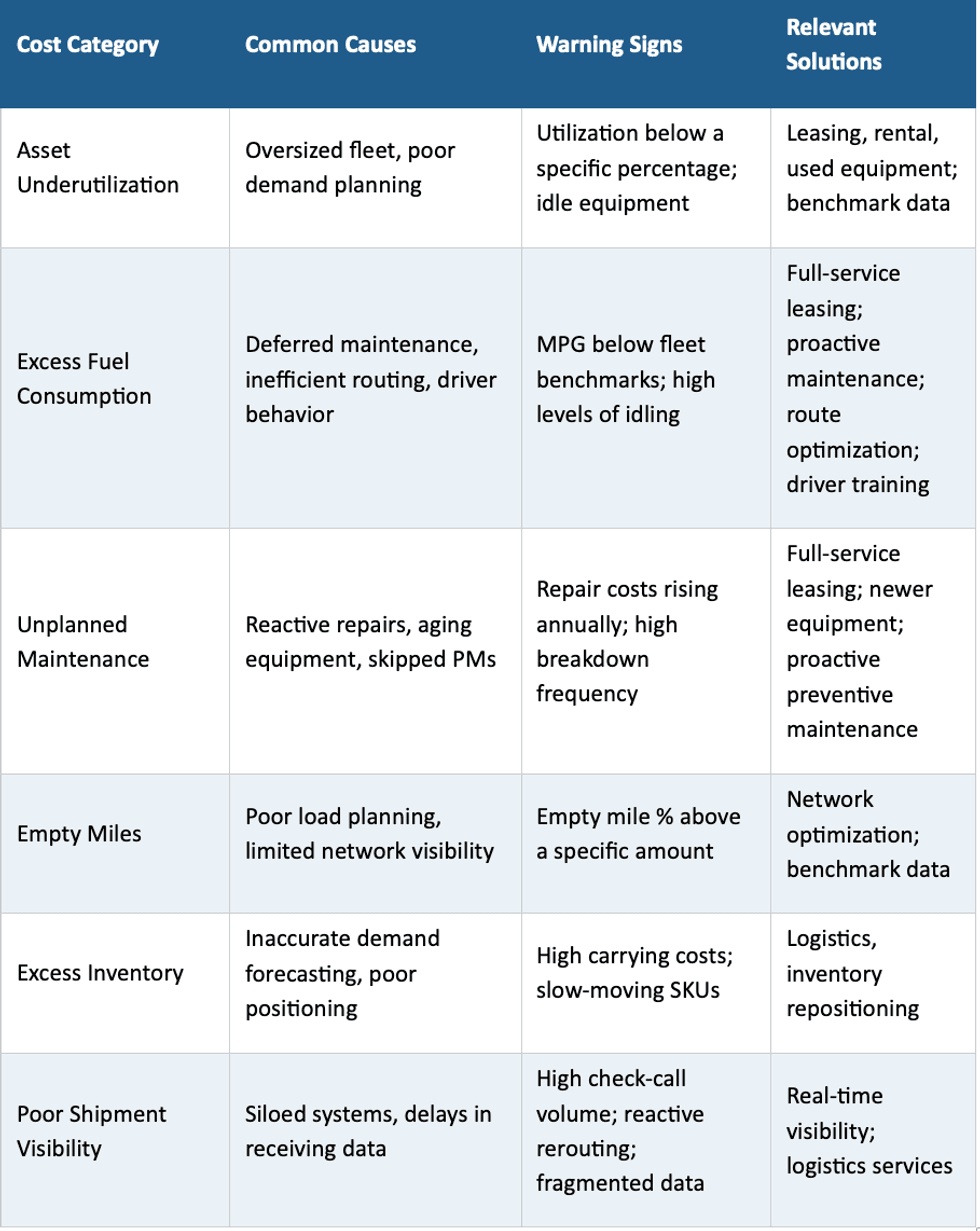
Solutions for Reducing Hidden Costs
Addressing hidden costs rarely comes down to a single fix. The right combination of solutions depends on an organization’s specific challenges, but several proven approaches can make a meaningful difference across different cost categories.
Full-service leasing: Leasing trucks and trailers helps fleets reduce maintenance surprises, improve uptime and create more predictable operating expenses.
Rental trucks and trailers: Flexible capacity through rental equipment allows fleets to respond to changing demand without the cost of carrying underutilized equipment.
Used trucks and trailers: Pre-owned equipment offers a cost-effective way to add capacity, reducing acquisition costs while giving fleets the flexibility to deploy equipment quickly when business conditions change.
Logistics: Logistics solutions help companies identify and address inefficiencies in network design, routing, inventory positioning and capacity management, creating opportunities to improve performance across the entire supply chain.
Start Finding What’s Costing You
Hidden costs don’t disappear on their own, but they can be controlled. For carriers and shippers willing to look beyond obvious line items, the opportunity is significant. Better visibility, smarter use of data and the right operational solutions can turn inefficiencies into savings - the first step is knowing where to look.
Penske works with carriers and shippers across the country to identify and eliminate hidden costs through leasing, rental, used trucks and logistics solutions.Learn More
Looking for more information on eliminating hidden costs?
- How Leasing Helps Control Hidden Fleet Costs
- How Rental Trucks and Trailers Help Prevent Unexpected Fleet Costs
- How Logistics Solutions Reveal Supply Chain Cost Gaps
- How the Right Used Truck Strategy Helps Reduce Fleet Costs